



Work from Home Scam

Yet another kind of social media scam that has come under the radar of security officials is the “work from home scam”. This blog explains how such scams work, and how can you steer clear from them.
Work from home scams are mostly linked to people who are unemployed and look for jobs that can be carried out from the comforts of home. Such jobs promise attractive salary and purport better work life. With Internet reaching to every nook and corner of the world, scammers do not have to sweat to lure people into such scams.
How do Work from Home Scams Work?
The main methods that scammers use to execute such scams, include spam emails, advertisements and even noticeboards. Such scams may advertise different jobs so that they attract people from different backgrounds.
Here is an apt example of a work from home scam we came across off late:
We came across a work from home advertisement, offering an easy job of selling products of online warehouse websites. We had to sell these products as daily deals and services on our website. The advertisement also provided with the necessary tools for creating our own website and sell these products. And the more of these products we sell, the more money we bring in. Seems like an easy and decent job doesn’t it? Even we thought so. But, when we began to register for the job offer, we landed on a page where we had to make an online transaction of Rs. 4000, as the registration fee. It was at this point that we steered away from getting tricked from yet another online marketing scam.
Our malware team has recently discovered that such adds are being posted on social media sites like Facebook. Here’s a screenshot of it.

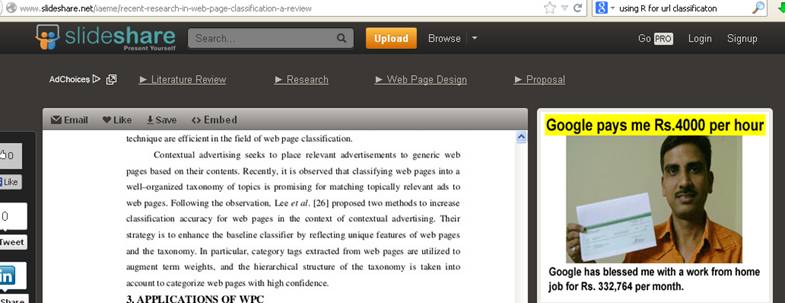
Work from home adds usually appear on the left or right hand side of the page of a website. Here’s an example of an add that purports the employer as Google, promising a ridiculous pay of Rs. 4000 an hour. (Click on the image for an enlarged view.)
At Quick Heal, we feel responsible for informing netizens of these and other types of scams. Comprehensive security solutions like that of Quick Heal come handy in blocking spam emails (which usually carry such advertisements). As far as the adds that appear on websites are concerned, you have to stay wary of them and most importantly, updated about all such scams.