Imagine someone sneaking into your kitchen not for the cookies in your jar but for something far more valuable — your online identity. This isn’t a scene from a spy movie; it’s the reality of session hijacking in cybersecurity!
Session hijacking, also known as cookie hacking or cookie hijacking, is a stealthy cyberattack that can greatly compromise your digital security. It grants hackers unauthorized access to your online accounts, leading to significant data breaches.
What makes cookie hijacking so frightening is its ubiquity. Consider how many websites you log into daily, each requiring a unique set of credentials. With sensitive data like credit card and social security numbers stored across numerous platforms, the repercussions of a successful hijack can be catastrophic.
Are you curious about how cookie stealing operates, the tactics attackers employ, and how to shield yourself from such threats? Let’s delve into the details.
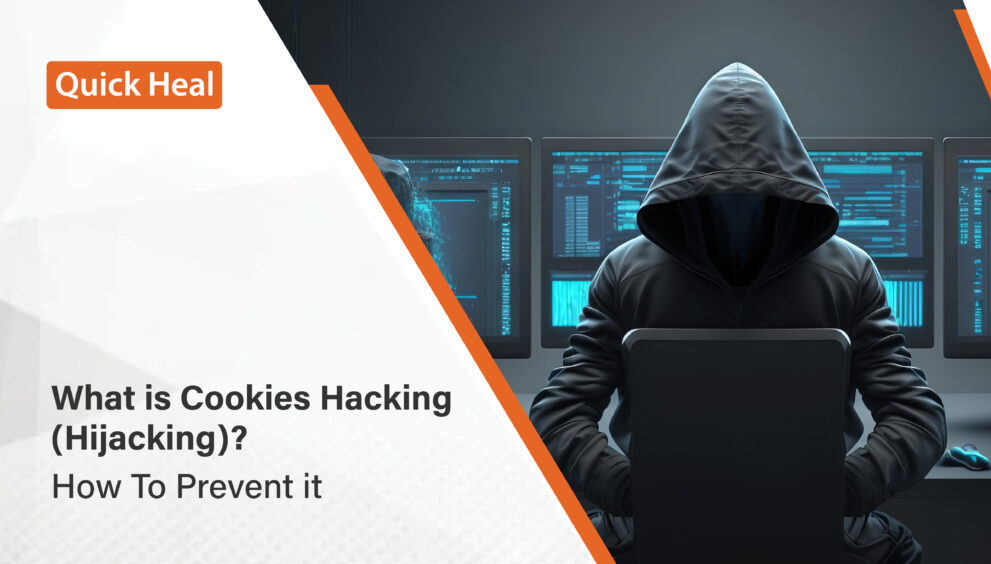
What is Cookies Hacking (Session Hijacking)?
Cookies hacking, also known as session hijacking in cybersecurity, is a cyber-attack where malicious actors intercept and manipulate session cookies to gain unauthorized access to a user’s online information. Session cookies are data stored on a user’s device that authenticate their identity and maintain their session with a website.
This type of attack is particularly concerning because it allows hackers to bypass traditional authentication measures and operate within the victim’s session, giving them significant control and access to private information.
How Does Cookie Hijacking Work?
The process typically begins with the attacker intercepting the data exchanged between the user’s browser and the web server. This interception can occur through various means, including network sniffing tools or by exploiting weaknesses in the website’s security protocols.
Here are some of the methods:
- Packet sniffing: The attacker captures unencrypted session cookies from network traffic.
- Cross-site scripting (XSS): The attacker injects malicious scripts to steal session cookies.
- Man-in-the-Middle (MitM) attacks: The attacker intercepts and manipulates communications to capture session cookies.
- Social engineering: The attacker tricks the user into revealing session cookies via phishing or deception.
- Physical access: The attacker retrieves session cookies from the device’s cache or uses malware.
What Are the Risks and Consequences of Cookie Hacking?
Session token hacking poses significant risks for both individuals and organizations. Here are some key risks and consequences:
- Unauthorized Access: Attackers can gain unauthorized access to a victim’s online accounts, allowing them to perform actions as legitimate users. This can lead to data breaches, unauthorized transactions, and account setting manipulation.
- Data Theft: Sensitive information, such as personal details, financial data, and confidential communications, can be stolen, leading to identity theft and financial fraud.
- Loss of Privacy: Poisoned cookies can expose private information, compromising the user’s privacy and potentially leading to further exploitation or blackmail.
- Reputation Damage: For businesses, cookie bombing incidents can damage their reputation, erode customer trust, and result in loss of business. Customers are likely to avoid services that have experienced security breaches.
- Financial Loss: Both individuals and businesses may face significant losses due to fraudulent transactions, legal fees, and compensation claims.
- Service Disruption: Attackers can disrupt services, causing downtime and impacting the availability of online services. This can be particularly damaging for businesses relying on continuous online operations.
How to Prevent Cookie Hijacking?
Preventing cookie hijacking requires a multi-faceted approach that addresses vulnerabilities and enhances overall security. Here are some measures to prevent cookie stealing:
Use HTTPS
Implementing HTTPS (Hypertext Transfer Protocol Secure) is essential for securing communication between the user’s browser and the web server. HTTPS encrypts the data transmitted over the network, making it difficult for attackers to intercept and read session cookies.
By ensuring all data exchanges are encrypted, HTTPS prevents attackers from using packet sniffing tools to capture sensitive information. Websites should also configure HSTS (HTTP Strict Transport Security) to enforce HTTPS connections, further reducing the risk of man-in-the-middle attacks.
Rely on Web Frameworks for Managing Session Cookies
Modern web frameworks offer built-in mechanisms for secure session management, including automatic handling of session cookies. These frameworks typically set secure and HttpOnly flags on cookies, preventing them from being accessed through client-side scripts and ensuring they are only transmitted over HTTPS connections. Leveraging these features reduces the risk of common vulnerabilities.
Update the Session Key After Authentication
To enhance security, it’s crucial to update the session key (or session ID) immediately after a user authenticates. This process, known as session regeneration, ensures that any session key potentially exposed before authentication is rendered useless. By issuing a new session key post-login, you mitigate the risk of session fixation attacks, where attackers set a predefined session ID that they later hijack once the user logs in.
Set Time Limits for User Sessions and Enforce Automatic Logoff
Setting time limits for user sessions and enforcing automatic logoff after periods of inactivity can significantly reduce the window of opportunity for attackers to hijack a session. Limiting the duration of validity of a session key can minimize the risk of long-term exploitation.
Implementing this measure also protects against scenarios where users forget to log out, leaving their sessions vulnerable. Configuring session timeouts and automatic logoff mechanisms ensures that sessions do not remain active indefinitely.
Wrapping Up
Understanding how these attacks operate and their consequences underscores the necessity of robust security measures. In addition to the measures mentioned above, utilizing security solutions like
Quick Heal Total Security can provide an extra layer of defense. Quick Heal offers advanced features such as threat protection, a secure Wi-Fi network, and secure financial transactions, ensuring your digital interactions remain safe.
Stay vigilant, stay informed, and prioritize security to navigate the digital world safely!