




# Tags

Can you spot a phishing email? Take this test and find out!

One of the oldest, nastiest and most lucrative tools used by hackers is phishing – a method to fool you into revealing your personal and sensitive information such as debit/card numbers, passwords, ATM pin, date of birth – any data that can personal identify you. Here’s an example of a classic phishing attack: You receive […]

An in-depth analysis of a new, emerging “.url” malware campaign – by Quick Heal Security Labs

Last week, we had blogged about the emergence of a new attack vector ‘.url’ which is used to spread malware. In this blog post, we will deep-dive into the attack chain of this ‘.url’ vector and elaborate on the Quant Loader malware which is actively making use of it. Let’s take a look at the […]

An analysis of the Zenis ransomware by Quick Heal Security Labs

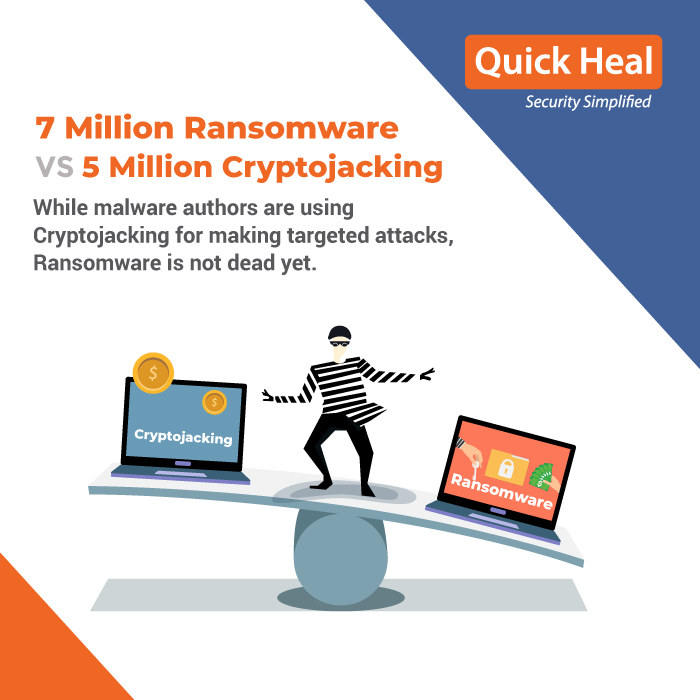
Quick Heal Security Labs has come across a new ransomware that goes by the name ‘Zenis’. The ransomware not only encrypts files but also intentionally deletes the infected system’s backup.   The behavior of Zenis ransomware Upon inside a computer, the ransomware performs the following checks before it starts encrypting the user’s data. Whether the […]

Email campaign using .url extensions to abuse Internet Explorer vulnerabilities (CVE-2016-3353)

In the wild, malspam campaigns are a major medium to spread malware. Previously, we have written about such campaigns using MS Office files with malicious macro and using vulnerabilities. Recently, we observed a spam campaign that uses .url files as a first-stage downloader to spread malware and bypass security features. On 13th September 2016, Microsoft […]

7_computer_viruses_you_should_know_about

A free guide to 7 computer viruses you should know about

Computer viruses are nasty little programs that are designed to lay waste to your computer. Some destroy files stored on your PC, while some trigger different software to malfunction. More nefarious viruses steal your confidential information and some even go to an extent to rig a system’s power load and cause it to catch fire. […]